
Key Takeaways
Match the packing materials for fragile items to the size, weight, surface and vulnerability of each piece.
Wrap glassware individually and use dividers, cushioning and suitable positioning to prevent contact and movement.
Protect artwork and mirrors according to their surfaces, frames, edges, corners and overall size.
Build sturdy, well-cushioned boxes, label them clearly and keep them stable during transport to reduce the risk of damage.
Fragile belongings need more than a strong box. Glassware, artwork and mirrors are vulnerable to impact, pressure and vibration in ways ordinary household goods are not, and each type calls for a slightly different approach.
This guide walks you through how to handle these items safely, which packing materials to use, and what to do and avoid when packing and transporting them.
What Are Fragile Items?
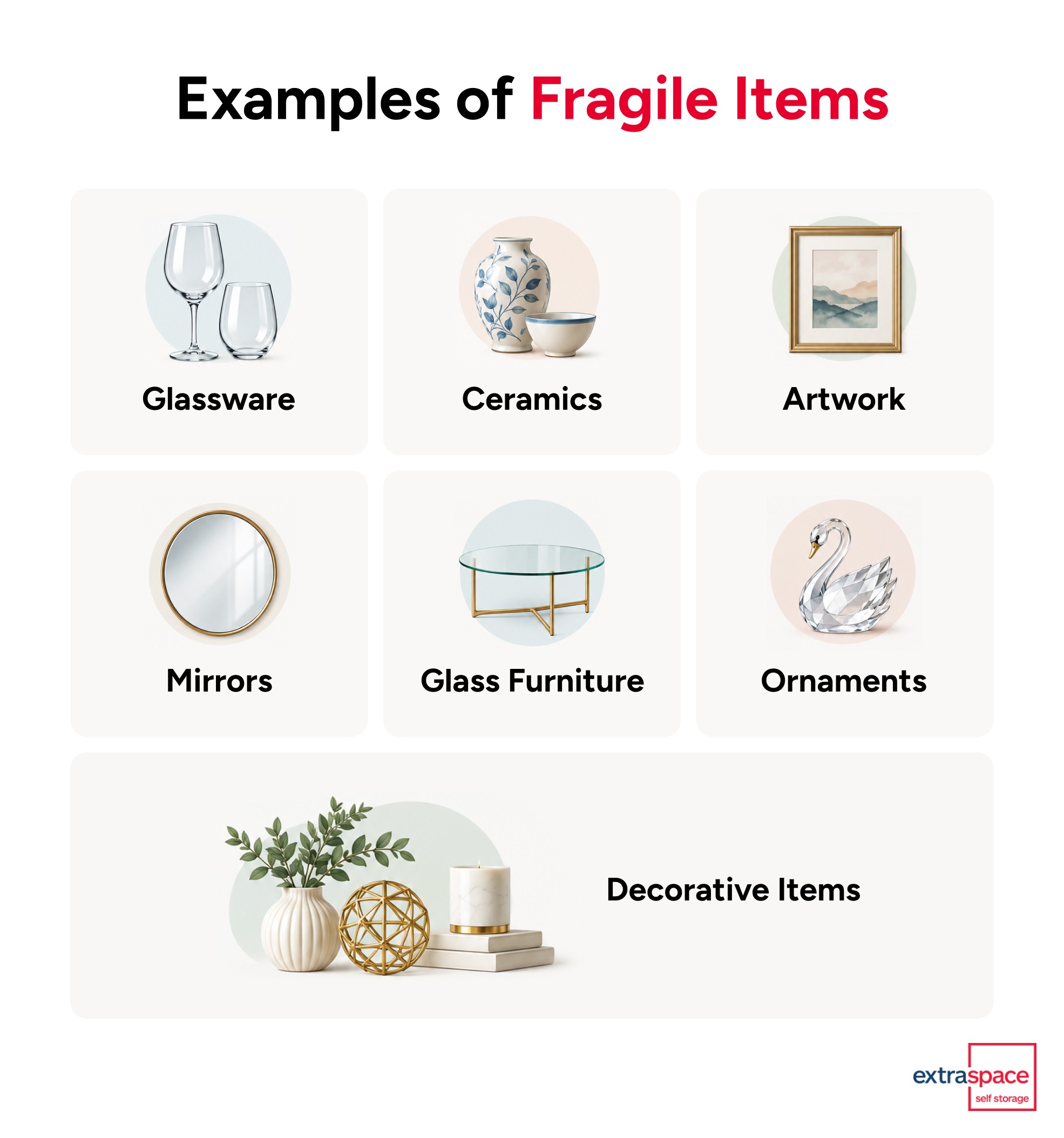
Belongings that can crack, shatter, scratch or suffer other damage from impact, pressure or sudden movement generally require extra care during handling. Common examples include:
Category | Examples |
Glassware and ceramics | Glasses, plates, cups, vases and similar pieces |
Artwork | Framed prints, paintings, canvases and decorative pieces |
Mirrors and glass furniture | Wall mirrors, glass tabletops and similar surfaces |
Other delicate belongings | Ornaments and decorative objects that can be affected by knocks or pressure |
Because these belongings vary in shape, weight and surface, the materials and techniques used to handle them should also vary.
What Packing Materials Do You Need for Fragile Items?
The packing materials you need depend on the size, weight, surface and vulnerability of what you are handling. A wine glass, framed print and full-length mirror each require a different combination of cushioning, separation and support.
Sturdy moving boxes in suitable sizes
Double-walled corrugated boxes for heavier or particularly delicate pieces
Packing paper for individual wrapping and filling gaps
Bubble wrap for additional cushioning
Foam or other cushioning materials
Cardboard dividers for separating glassware and similar pieces
Corrugated cardboard sheets for added rigidity
Acid-free tissue or glassine for certain sensitive artwork surfaces
Strong packing tape designed for packing or shipping
Fragile labels for clearly identifying delicate contents
How to Pack Glassware
Each piece needs individual wrapping and separation to prevent contact during handling.

Wrap Each Piece Individually
Wrap each glass separately so pieces do not touch inside the carton. For stemware, wrap the stem with a strip of packing paper first, then wrap the entire glass. Pay extra attention to thin stems, rims and handles, which are particularly vulnerable to breakage. Add bubble wrap around more delicate pieces where additional cushioning is needed.
Separate and Cushion the Box
Line the bottom of the carton with crumpled paper or foam before adding the glassware. Use cardboard dividers to keep each piece apart, then fill remaining gaps so the contents cannot shift. Place heavier, sturdier pieces toward the bottom and delicate crystal or thin stemware above them, or use a separate carton for especially delicate pieces. Avoid overloading the carton.
Plates and other glassware and ceramic pieces should be cushioned between dividers and placed on their edges rather than stacked flat.
Wrapping each piece is not enough if the contents can still move inside the carton. The pieces need both separation and stability to reduce the chance of contact and breakage.
How to Pack Artwork
The surface, frame and overall construction determine how it should be handled and protected.
Protect the Artwork and Surface
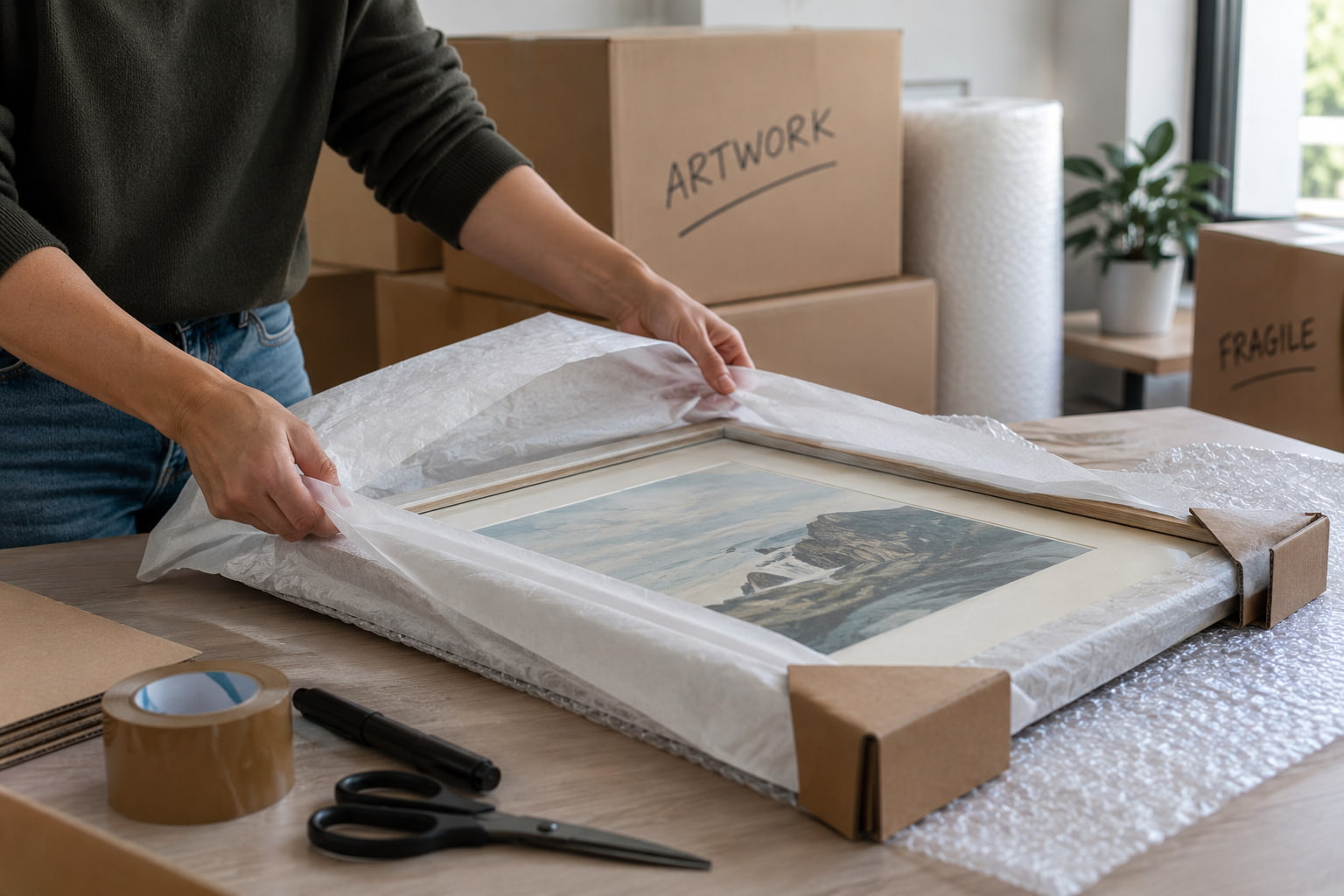
Handle artwork by its frame where possible rather than pressing on the surface. For painted or finished surfaces, use a nonabrasive layer such as acid-free tissue or glassine instead of placing bubble wrap directly against them. The suitable material depends on the surface, so check what it can tolerate before wrapping.
Protect Frames, Glass and Corners
Frame edges and corners are particularly vulnerable to knocks, so protect them separately with pre-formed cardboard corner protectors or folded cardboard guards. Where appropriate, apply a low-tack painter's tape X or grid across framed glass to help contain fragments if the glass breaks. This will not prevent the glass from breaking, and the tape should remain on the glass only, away from the artwork itself.
Choose Suitable Outer Protection
Place the piece in a sturdy, appropriately sized box with cushioning around the frame to limit movement. Larger or particularly delicate pieces may require more rigid outer packaging.
Surface protection and impact protection serve different purposes: one helps shield the finish, while the other helps absorb knocks. Both may be needed depending on the piece, particularly when storing artwork.
How to Pack Mirrors Safely
The glass, edges and overall size determine the level of support needed during handling and transport.

Protect the Glass, Edges and Corners
Cover the glass surface before wrapping the mirror, giving particular attention to the edges and corners, which are especially vulnerable to impact. Use rigid cardboard corner protectors for added support, then cushion the entire piece to help reduce the risk of damage.
Keep Large Mirrors Secure
Use a picture or mirror box, or a telescoping carton, where the size is suitable. Keep large mirrors upright on their edge during handling and transport rather than laying them flat, and support them so they cannot tip or slide. Keep other belongings from pressing against the surface.
Large mirrors need more support than smaller glass pieces because their size and weight can make them harder to keep stable during handling.
How to Pack Fragile Items in a Box
Use the box to create a stable, cushioned space that limits contact and movement during handling.
Choose the right box. Use a sturdy carton that is appropriately sized for the contents.
Cushion the base. Add a protective layer before placing anything inside.
Wrap each item individually. Keep pieces from making direct contact with one another.
Separate the contents. Use dividers or another suitable material between pieces.
Create a cushioning buffer. Where practical, leave roughly two inches between the contents and the box walls.
Fill remaining gaps. Add cushioning until nothing can shift inside.
Cushion the top. Add a final protective layer before closing the carton.
Seal securely. Use the H-taping method across the centre seam and outer flap edges.
Label clearly. Mark “FRAGILE” and any orientation instructions on multiple sides.
Once sealed, carefully tilt the box. If you can feel or hear anything shifting, reopen it and add more cushioning before transport.
Mistakes to Avoid When Packing Fragile Items
Avoiding a few common errors can reduce unnecessary damage during handling and transport.
Using weak, damaged or unsuitable boxes
Skipping individual wrapping
Leaving large empty spaces that allow contents to shift
Using insufficient cushioning
Overloading a carton beyond what it can safely hold
Placing heavy belongings on delicate pieces
Leaving edges and corners unprotected
Allowing pieces to touch each other directly
Using unsuitable tape on vulnerable surfaces
Failing to label cartons clearly
Using the same handling approach for glassware, artwork and mirrors despite their different shapes and vulnerabilities

How to Protect Fragile Items During Transport
Packing is only part of the process; how the boxes are positioned and handled during transit also matters.
Keep cartons stable and well supported.
Do not place heavy boxes or furniture on top of them.
Secure them against sliding or tipping during transit.
Follow any orientation instructions marked on the carton.
Account for vibration, particularly on longer journeys.
Where possible, keep sensitive artwork away from extreme heat or humidity, particularly when transporting it in Dubai or elsewhere in the UAE.
Consider suitable insurance or valuation coverage for particularly valuable pieces.
If a moving service is handling the load, make sure the team knows which boxes contain delicate belongings and any specific handling requirements.
Pack Fragile Items With Care
No single approach suits every delicate belonging. Consider the item's material, shape, size and vulnerability when deciding how it should be handled, then choose the level of support and protection it requires.
Taking that approach can help you avoid treating a wine glass, framed piece and large mirror as if they present the same risks.
