
Key Takeaways
Air freight pricing can be based on actual or volumetric weight, with the higher figure typically determining the chargeable weight.
Customs declarations in Dubai are processed electronically through Mirsal 2, with additional review or inspection possible.
Certain goods, including lithium-ion batteries and regulated medical products, may require additional approvals or specific transport conditions.
Airport-to-airport and door-to-door transit times can differ because of acceptance cut-offs, customs, handling and final delivery.
Air freight plays an important role in Dubai’s international trade and logistics network. For businesses and individuals considering this option, understanding the basics can make it easier to assess what is involved before making a decision.
This guide explains how air freight works, when it may be the best option, and what to consider before booking.
What Is Air Freight?
It involves transporting goods by aircraft for commercial and certain personal purposes. Air freight can accommodate a range of cargo, from ordinary commercial goods to items requiring specialised handling. However, not every item is suitable for air transport, as restrictions and handling requirements vary depending on what is being sent.
How Does Air Freight Work in Dubai?
The process begins by assessing the goods and their requirements.
Assess the Shipment
Before booking, assess the goods based on their type, quantity, actual weight, dimensions, origin and destination, required delivery timeframe, special handling needs and any regulatory restrictions.
One important consideration is how the shipment will be charged. Air cargo pricing often depends on volumetric weight rather than actual weight:
Volumetric weight (kg) = Length × Width × Height (cm) ÷ 6,000
This formula, commonly used across the air-cargo industry, reflects the space a shipment occupies rather than its physical weight. Whichever is higher, actual or volumetric weight, typically becomes the chargeable weight. As a result, a large but lightweight parcel can cost more than its scale weight alone would suggest.

Prepare and Package the Cargo
Choose packing supplies that suit the contents and limit movement during handling. Packages should be clearly labelled, while bulky or fragile goods may need palletising or additional protection. Sensitive or regulated items may also require specialised packaging beyond standard materials.
Complete the Required Documentation
Most air shipments require standard paperwork, including:
Air Waybill (AWB)
Commercial invoice
Packing list
Customs declaration
Certificate of Origin, where applicable
Permits, certificates or other approvals, where required
In Dubai, customs declarations are processed electronically through Mirsal 2, Dubai Customs' electronic clearance system, with Dubai Trade providing a channel for submission. Accurate descriptions and classifications help support the clearance process, while freight forwarding can coordinate the wider movement and associated requirements.
Customs Clearance and Airport Handling
Once the documentation is submitted, the declaration is processed electronically and may be subject to risk-based review. Depending on the outcome, additional documents or a physical inspection may be required before release. Declarations submitted through Mirsal 2 receive either a clearance message or a hold, and the applicable requirements must be satisfied before the goods are released.
The goods are then handled and screened at the relevant airport cargo facility. For import collections, an Air Waybill and Delivery Order may both be needed for release, although the exact sequence can vary by terminal and shipment arrangement.
Flight, Tracking and Final Delivery
Once released, the goods are assigned to an available flight based on the route and shipment details, then flown to the destination airport. Tracking updates may be available along the way. On arrival, destination customs clearance takes place where required, after which the goods proceed to their final delivery or collection point.
What Types of Air Freight Services Are Available?
Air freight services differ mainly in their level of speed, priority and handling requirements.
Standard Air Freight
This option suits goods that need to move relatively quickly but don't require the fastest possible turnaround. It balances transit time and cost, making it suitable for regular commercial shipments where a set schedule is more important than maximum speed.
Express Air Freight
Express service is designed for tight deadlines, with priority handling and faster scheduling taking precedence over cost. Carriers generally charge more for this level of service because of the additional priority given during booking, handling and loading.
Specialised Air Cargo
Certain goods need controls beyond standard handling, such as temperature-sensitive products, regulated items or high-value cargo requiring additional security. Requirements vary by product, route and carrier, and not every airline or facility offers the same specialised handling.

When Is Air Freight the Best Option?
The decision depends on whether the practical benefits of air transport justify its higher cost for your circumstances.
When Speed Is a Priority
Air freight is worth considering when missing a deadline would have real consequences, whether that's a production line waiting on parts, inventory needed for a launch date or personal belongings required by a fixed date.
When the Shipment Is Relatively Small
For smaller consignments, the higher price of air transport may be easier to justify when only a limited volume of goods needs to be sent. Dimensions can still affect the price through chargeable weight, so a compact but bulky item may cost more than its physical weight suggests.
When Cargo Is Valuable or Time-Sensitive
Faster transport can reduce the impact of delays, particularly for goods with a limited shelf life or a specific delivery deadline. However, speed alone does not make cargo safer from damage or theft, so it should not be the only factor in your decision.
When Another Method May Be Better
Large or bulky consignments, deliveries without a firm deadline and shipments where minimising cost matters more than arrival speed may be better suited to sea freight.
Key Differences for Decision-Making
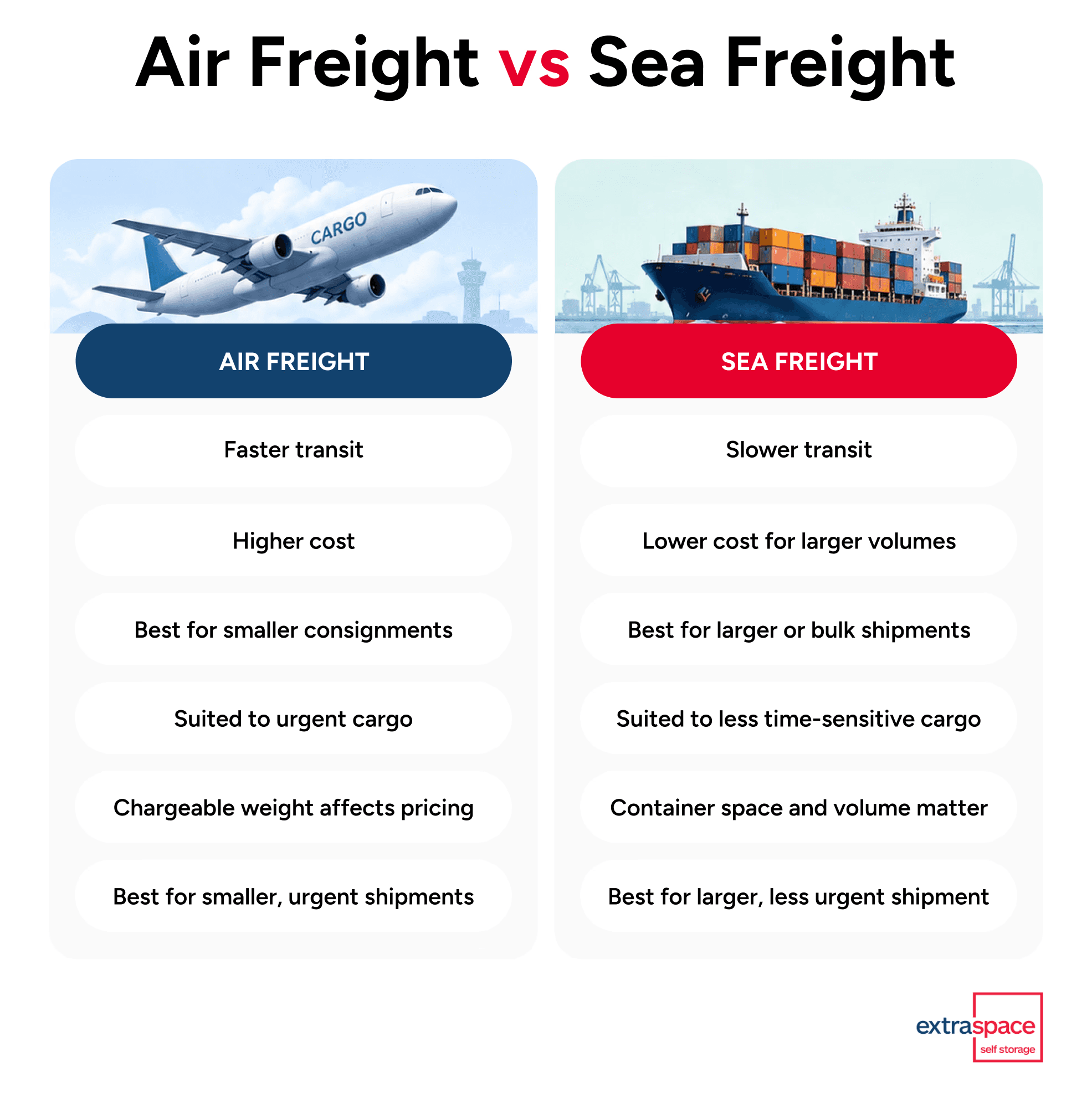
Air freight generally offers faster transit and suits smaller, urgent consignments. The higher cost can be easier to justify when delivery speed matters or only a limited volume needs to be transported.
Sea freight is generally more economical for larger or bulk shipments where delivery speed is less critical. It can be a practical choice when the priority is moving greater volumes while keeping costs lower.
The choice ultimately comes down to the amount of goods, required timeframe and available budget.
How Much Does Air Freight Cost in Dubai?
The price depends on several factors, including actual or chargeable weight, dimensions, destination and route, cargo type, urgency, special handling, airport and terminal charges, and pickup or final delivery arrangements. Depending on the shipment, a quote may also include fuel or security surcharges, documentation fees or customs-related charges, although not every fee applies to every shipment.
Rates can also change with airline capacity, route demand, seasonal volumes and fuel-related changes. Pre-holiday periods and major international trading cycles may put pressure on available capacity on some routes, but pricing varies by lane and season.
What Cargo Restrictions Should You Check Before Booking?
Air cargo is subject to airline rules, customs regulations and applicable dangerous goods requirements, including the IATA Dangerous Goods Regulations (DGR). Certain goods may require additional classification, packaging, approvals or carrier acceptance.
Lithium-ion batteries: UN3480 covers batteries shipped on their own, while UN3481 covers batteries packed with or contained in equipment. Requirements vary depending on the configuration.
Pharmaceuticals and medical products: Some may require additional permits or approvals from the relevant UAE authority, depending on the product and its intended use.
Other regulated goods: Requirements can vary according to classification, quantity, packaging, airline and destination.
Check the specific requirements for your goods before booking, as restrictions can vary between shipments and routes.
Which Airports Handle Air Freight in Dubai?
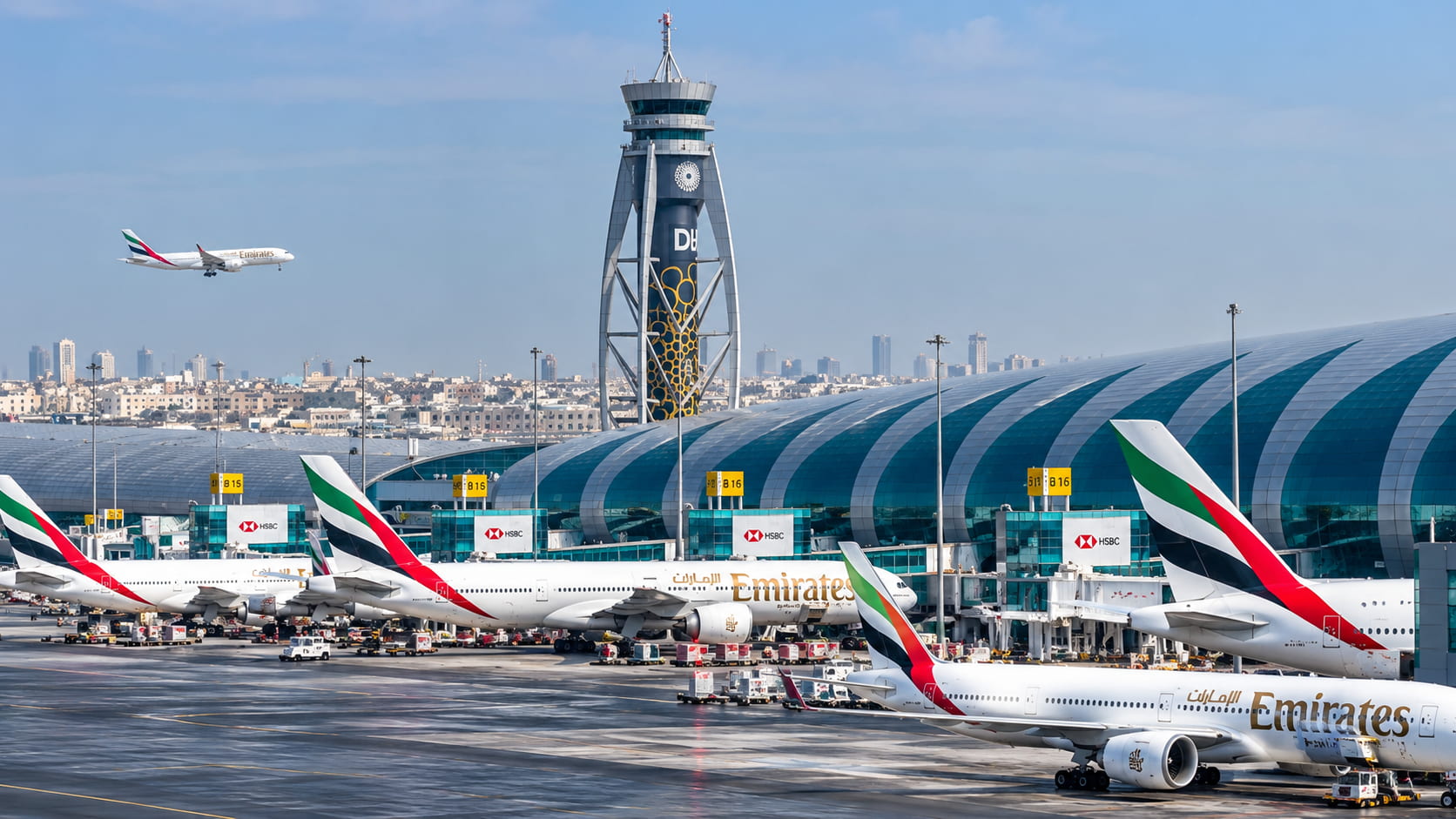
Dubai's air freight network is supported by two key airports, each serving a different role within the wider cargo system.
Dubai International Airport (DXB)
A major air cargo facility supporting international operations alongside passenger traffic. Cargo operations include services by Emirates SkyCargo and dnata.
Al Maktoum International Airport (DWC)
A major cargo and logistics hub with dedicated cargo facilities. Its bonded road link to Jebel Ali Port supports sea-to-air cargo movements, while established road feeder arrangements connect cargo between Dubai’s airports.
How Long Does Air Freight Take From Dubai?
Flight time and total delivery time are not the same. Airport-to-airport transit covers the aircraft journey and related airport stages, while door-to-door transit also includes pickup, cargo acceptance, documentation, customs, handling and final delivery.
Airport cargo facilities operate according to acceptance cut-off times before departure, so missing the applicable cut-off can push goods onto a later flight. Flight availability, customs processing, inspections or missing paperwork can extend the timeline further. Assess the total transit window your goods are likely to need rather than relying on flight duration alone.
What Should You Check Before Booking Air Freight?
Before booking, confirm that you have considered:
Goods and restrictions: What you're sending and whether it is permitted for air transport.
Weight and dimensions: Actual measurements and whether volumetric weight could affect the charge.
Classification and paperwork: Required documents and the correct cargo classification.
Destination requirements: Import rules and approvals that may apply at the destination.
Packaging and handling: Any protection or specialised handling the goods require.
Transit window: The total time needed, including airport, customs and final delivery stages.
Quoted price: What the rate includes and whether airport, customs or other local charges are separate.
Insurance or valuation: Coverage to consider based on the value and nature of the goods.
Transport method: Whether air or sea freight is more appropriate for the size, urgency and budget.
Choosing the Right Air Freight Option
Choosing air freight comes down to whether its speed and flexibility justify the additional cost for your particular goods. Consider the urgency of the delivery, the size and nature of the consignment, destination requirements and your overall budget before deciding, as another transport method may be more practical if your priorities change.
The right choice is the one that fits your delivery priorities without adding unnecessary cost or complexity.
