
Key Takeaways
Relocating abroad involves more than transporting belongings from one country to another. Planning your documents, finances, home arrangements and destination research early can help you:
Decide what to take, sell, donate, dispose of or store before you leave.
Prepare for your first few weeks abroad, including accommodation, essential services and everyday needs.
Keep the practical and administrative aspects of your relocation organised from departure through arrival.
An international relocation involves personal, financial, administrative and household decisions that often depend on one another. A visa application might affect when you can secure accommodation, while a storage decision could depend on how long you expect to be away. Handling these details at the last minute makes the process harder than it needs to be.
This guide covers the key decisions to make before you leave, from your documents and finances to your belongings, home and first few weeks abroad.
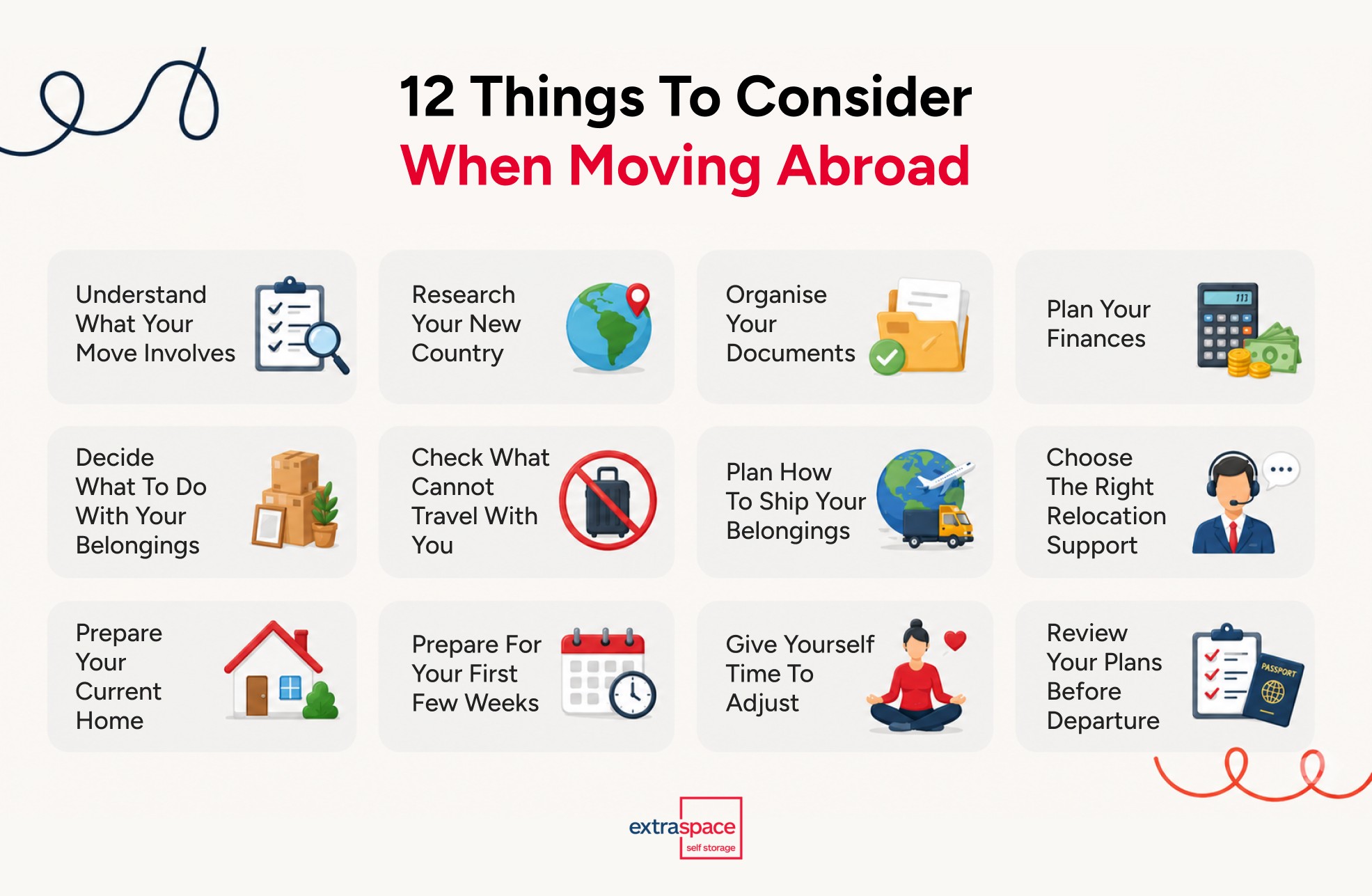
Understand What Your Move Will Involve
Before making individual arrangements, establish what your international relocation will involve. Consider:
Destination and reason: Where are you going, and what is prompting the move?
Duration: Is the relocation temporary or permanent?
Timing: Do you have a rough departure window?
Who is moving: Are you relocating alone, with a partner or with children?
Existing arrangements: Have you already secured employment, education or accommodation?
What you are leaving behind: Identify any UAE property, subscriptions and belongings that will not travel with you.
These decisions affect what you need to arrange later, from accommodation and documentation to your belongings and departure plans.
Create A Relocation Timeline
A clear timeline can help you work backwards from your departure date and prioritise arrangements that depend on earlier approvals or decisions.
Timing | What to focus on |
Several months before | Immigration and residency requirements, employment or education arrangements, accommodation and major financial decisions. |
Several weeks before | Belongings, storage or transport bookings, utilities, travel preparations and remaining administrative tasks. |
Final days | Confirm essential documents, complete the property handover and prepare your travel essentials. |
After arrival | Confirm accommodation, set up essential services and banking, and begin settling into your new surroundings. |
Some tasks depend on others. For example, you may need visa approval before finalising travel arrangements, so setting deadlines early can prevent one delay from affecting the rest of your schedule.

Research Your New Country Before You Leave
Research your destination before making final decisions about your belongings and arrangements. Focus on the areas that could affect what you take with you and what you need to organise before arrival:
Climate: Check seasonal conditions to determine which clothing and seasonal belongings are worth bringing.
Housing: Consider the size and type of your new home before deciding which furniture and household goods to keep.
Electrical standards: Confirm whether your appliances are compatible with the local electrical system before taking them.
Healthcare: Find out how healthcare works and arrange any necessary medical records, prescriptions or insurance in advance.
Transport: Understand your local transport options so you know what you will need for daily travel.
Banking and payments: Check how residents typically manage banking, payments and currency in your destination.
Everyday services: Identify essential services you may need soon after arrival, particularly if you are moving somewhere unfamiliar.
This can help you identify belongings that may be unsuitable, unnecessary or more practical to replace once you arrive.
Organise Your Immigration And Personal Documents
Confirm your passport's validity and identify which visa, residence or work permit requirements apply to your destination. Depending on your circumstances, you may also need birth or marriage certificates, employment or education records, medical records, prescriptions and insurance information. Gather these records early and check whether any need additional preparation for your destination.
Keep passports, visas, travel documents, medical information and other critical paperwork with you during the journey rather than among household belongings that may arrive later. Keep secure digital copies of essential records as a backup if your physical documents are lost or inaccessible.
Plan Your Finances Before Relocating Internationally
Before departure, budget for travel, accommodation deposits, initial setup costs, storage or shipping, and any outstanding UAE bills or subscriptions. After arrival, make sure you can access local banking and manage currency exchange, with enough funds set aside for initial living expenses and unexpected costs while your income or other arrangements stabilise. Because financial and tax requirements vary by destination, review the specific rules that apply to your international relocation well in advance.
Decide What To Do With Your Belongings
An international relocation is a useful point to assess what genuinely needs to come with you.
Decide What To Take
Consider how often you use each item, its value, replacement cost, size and weight, and whether it suits your new home and climate. Give particular thought to bulky furniture, large appliances, electronics, fragile possessions and anything valuable or difficult to replace.
Decide What To Do With Your Vehicle
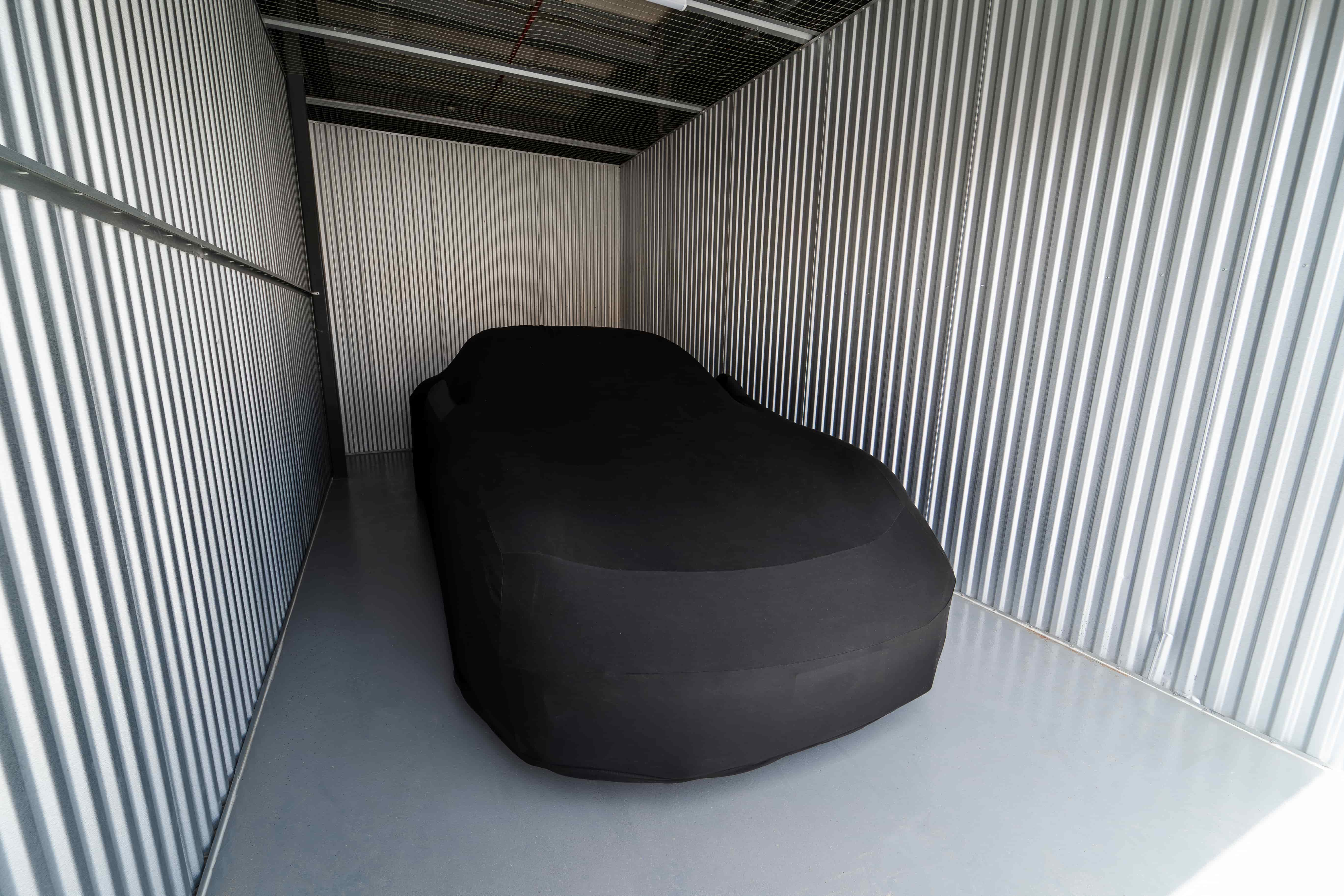
If you own a vehicle, decide early whether to take it with you, sell it before departure or keep it in the UAE. Compare the cost and requirements of vehicle shipping with the vehicle's value and the cost of replacing it at your destination. If you plan to return or need more time to decide, car storage can provide a practical option while you are abroad.
Sell, Donate Or Dispose Of Unwanted Items
Once you know what you are keeping, clear out the rest. Duplicates, furniture that will not suit the new property, appliances that are costly to move, unused clothing, excess linen and anything damaged, outdated or easily replaced locally are all worth parting with before the move rather than packing on the assumption you will decide later.
Store What You Are Not Ready To Leave Behind
If you want to keep certain belongings but cannot take them with you immediately, storage can provide a practical option during the transition. This may be useful if your relocation is temporary, you are unsure whether you will return, your new accommodation is furnished, or your property will not be ready when you leave the UAE. Short- and long-term storage rentals can accommodate different needs, from bridging a temporary gap between homes to keeping sentimental, seasonal or difficult-to-replace belongings while you are living abroad.
Check What Cannot Travel With You
Restrictions on food, plants, medicines, chemicals and other regulated goods vary by destination. Hazardous materials, including flammable liquids, may also be unsuitable for ordinary transport. Before packing these items, check the rules that apply in your destination country, as something permitted in the UAE may be restricted or prohibited elsewhere. The rules covering prohibited and restricted goods in the UAE can also help you understand which items may require additional checks before transport.
Plan How Your Belongings Will Reach Your New Home
Decide which items you will take with you and which will be sent separately, keeping in mind that shipped belongings may arrive later. Air freight suits smaller, time-sensitive loads, while sea freight is generally better for larger volumes.
Keep medication, important documents, electronics and chargers, basic clothing, toiletries and essentials for children or dependants with you rather than in shipped belongings. If you are sending valuable or fragile items, confirm what protection or insurance is included before arranging transport.
Know What To Look For In International Relocation Support
The right support can make a complex international relocation easier to coordinate, but services and responsibilities can vary between providers.
Check Relevant Experience
Choose a provider with experience in international relocations and, where possible, knowledge of your destination country or region. Household moves involve different requirements from commercial freight, so check whether they regularly handle residential shipments and the types of belongings you need to transport.
Understand What The Service Includes
Check what the service includes, such as packing, collection, transport, customs or documentation support, delivery, unpacking and storage. Comparing the scope of each moving service can help you understand what is covered, from transporting your belongings through to arranging shipping or storage when needed.
Ask About Your Specific Belongings
Tell the provider about fragile or valuable possessions, bulky furniture, fine art, antiques or specialist equipment before arranging transport. These items may require different packing, handling or protection, so confirming the requirements in advance can help avoid problems later.
Prepare Your Current Home Before Departure
Before leaving the UAE, complete the practical and administrative tasks needed to close out your current home:
Disconnect or transfer utilities.
Cancel or transfer local subscriptions and services.
Settle any outstanding tenancy or property obligations.
Clean the property before handover and return keys or access devices.
Arrange for important correspondence to be redirected.
Completing these arrangements before departure can help prevent unresolved household or property matters from carrying over after you leave.

Prepare For Your First Few Weeks Abroad
Once you arrive, confirm access to your accommodation and arrange the services you need for day-to-day life. Set up utilities and internet, familiarise yourself with local transport, arrange banking or payment methods, and identify nearby healthcare providers, shops and other services you are likely to use. Taking care of these practical arrangements early can make the first few weeks easier to navigate.
Prepare An Arrival Essentials Bag
Keep a separate bag with medication, chargers, basic clothing, toiletries, key contact information and anything children or dependants may need. Keep your important documents with you as well, particularly if your shipped belongings are due to arrive later.
Give Yourself Time To Adjust
Adapting to a new country after an international relocation takes time beyond the practical work of getting settled. Give yourself space to establish a routine, understand how local systems work and become familiar with cultural differences. Staying connected with people you know and finding local communities or support networks can also help you feel more comfortable as you adjust to your new surroundings.
What To Review Before Leaving The UAE
Before departure, use this international relocation checklist to confirm that all key arrangements are in place:
Immigration and personal documents
Accommodation arrangements
Finances and banking
Utilities and subscriptions
Property or tenancy obligations
Belongings to take with you
Items to sell, donate or dispose of
Storage arrangements
Transport arrangements
Essential items for arrival
Important contacts
Make Your International Relocation Easier To Manage
An international relocation can involve decisions that extend well beyond arranging transport for your belongings. Taking the time to understand what you will need, what you can leave behind and what needs to be arranged before departure gives you greater control over the move and helps you start life in your new country with fewer unresolved tasks.

