
Key Takeaways
A few simple habits can turn a chaotic relocation into a manageable one.
Sorting tasks and possessions in advance reduces last-minute pressure.
Labelling, protecting and grouping belongings by room simplifies both loading and unpacking.
Having flexible options for storage or professional help can make unexpected gaps or challenges easier to manage.
A home move rarely goes wrong because of one big mistake. It usually falls apart through dozens of small decisions left until the same rushed afternoon: which boxes go where, what needs wrapping, and which items should travel with you. Tackling these decisions gradually, rather than all at once, can make the process far more manageable.
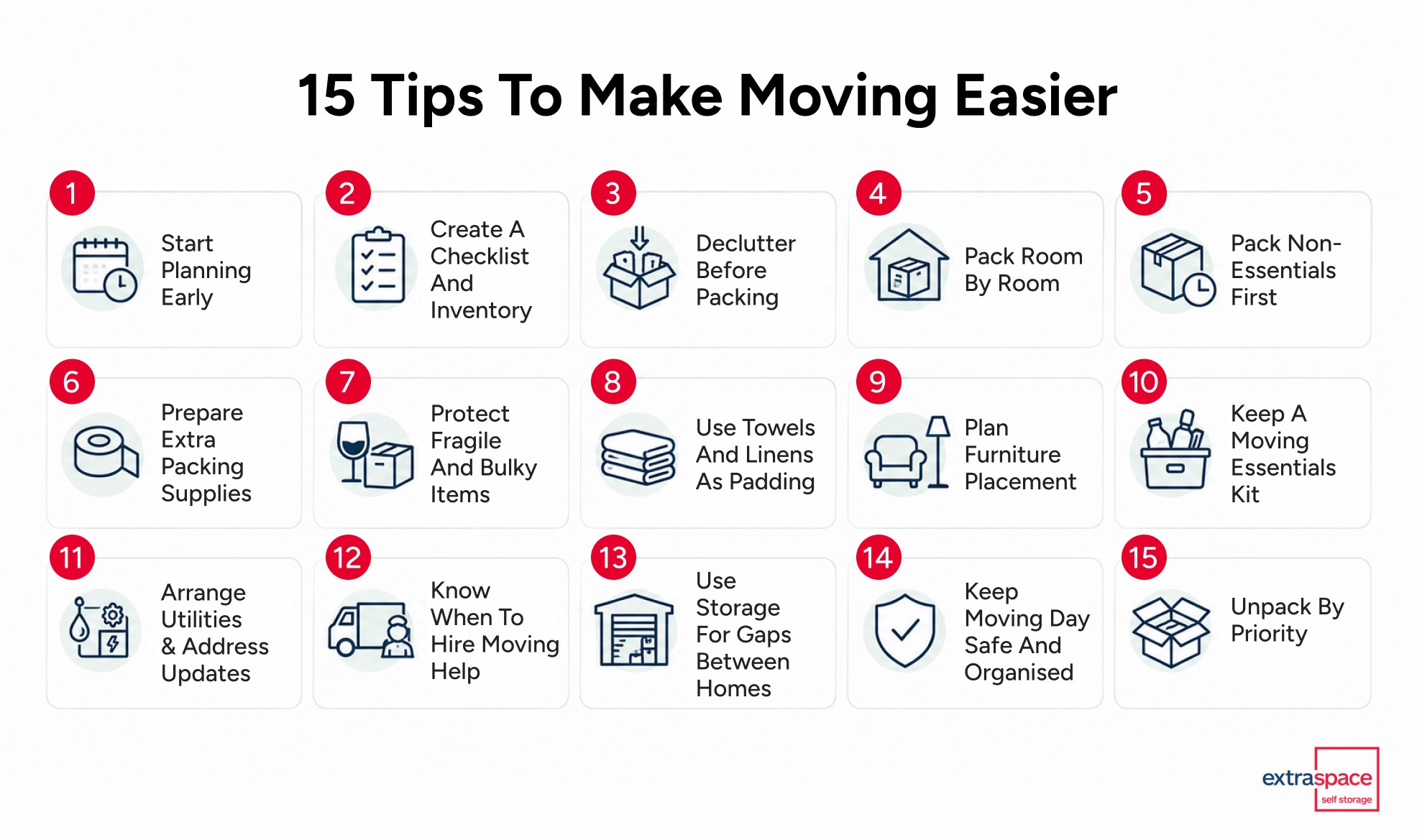
This guide sets out 15 practical ways to make the process easier, from the weeks of preparation beforehand to the first few days in your new property, covering timing, protecting your possessions, and knowing when outside help is worth arranging.
Practical Tips For Every Stage Of Your Move
From early preparation to settling into your new home, these tips cover the key tasks that can help you stay organised and reduce unnecessary stress.
1. Start Planning Early
Set your moving date as soon as you reasonably can, then work backwards to identify the tasks that need to be completed beforehand. Spreading these across several weeks gives you more time to deal with unexpected issues and reduces the pressure of doing everything at once.
Create a simple timeline covering:
Book movers or transport early, particularly if your preferred date is fixed.
Allow time to arrange property access, utility connections and other move-related administration.
Set deadlines for packing, cleaning and other tasks that need to be completed before the move.
Leave some time before moving day to deal with anything unfinished rather than organising in a rush.
This approach is particularly useful for larger households or moves involving more than one property, where there are more tasks to coordinate.
2. Create A Moving Checklist And Inventory
Keep two separate records: one for tasks that need completing and another for the belongings being transported. The checklist keeps outstanding jobs visible, while the inventory gives you a record of what is being taken to the new property.
For your checklist, note the specific tasks you need to complete and their deadlines, such as:
Booking the removal service or transport
Arranging property access and key handover
Disconnecting or transferring utilities
Updating important address records
Confirming any final cleaning or handover requirements
For the belongings you are taking, make an inventory list with the number of boxes, their contents and any valuable or fragile items. For higher-value pieces, note their condition before packing and take photographs where useful. This gives you a reference point if something is missing or arrives damaged.

3. Declutter Before You Pack
Sorting your belongings before packing reduces the volume you need to transport and gives you less to organise when you arrive. Go through each room and decide what you want to keep, donate, sell, recycle or dispose of.
Pay particular attention to:
Duplicates and items you rarely use
Seasonal belongings you may not need immediately
Furniture that no longer suits the new property or its layout
Items that are damaged, outdated or no longer useful
If you are genuinely unsure about an item, temporary storage can give you time to decide without adding it to the immediate load. This can be particularly useful when downsizing or moving into a smaller property.
4. Pack Room By Room And Label Every Box
Organising belongings by their destination room makes both loading and unpacking more straightforward. Rather than packing whatever is nearest to hand, work through one room at a time and keep its contents together. Using clear ways to label moving boxes can also make it easier to identify where each box belongs and what it contains.
When labelling boxes:
Write the destination room clearly.
Note the main contents for easy identification.
Mark fragile items and any special handling requirements.
Label more than one side so the information remains visible when stacked.
Use colour coding for larger households or multiple helpers.
Keeping each box clearly identified means you can direct it to the appropriate room as it arrives instead of sorting through everything again later.

5. Pack Non-Essential Items First
Start with belongings you will not need before moving day, such as out-of-season clothing, books, artwork, decorative pieces and kitchenware you rarely use. Keep everyday essentials accessible until closer to the move.
Working through less frequently used belongings first lets you spread the workload over several days and keeps the items you still need within easy reach.
6. Prepare More Packing Supplies Than You Think You Need
Estimate the boxes and materials you will need before you begin, then allow some extra in case you need more than expected. Keep essentials such as strong packing tape, bubble wrap and suitable cushioning on hand, along with different box sizes for different contents. Having the right packing supplies ready can help you avoid interruptions once you start.
Use smaller boxes for heavier items such as books and reserve larger boxes for lighter, bulkier belongings. This makes boxes easier to handle and reduces the risk of overloading them.
7. Pack Fragile, Valuable And Bulky Items Carefully
Use the right protection for each type of belonging rather than treating everything the same:
Protect Fragile Items
Wrap glassware, artwork and electronics individually, then fill empty spaces with suitable cushioning to prevent movement during transit.
Manage Heavy And Bulky Belongings
Avoid overloading boxes. Use smaller boxes for heavier contents, while bulky furniture and larger appliances may be easier to carry and protect when disassembled where appropriate.
Keep Valuables And Documents Separate
Keep irreplaceable items such as jewellery, passports and essential paperwork separate from general household boxes. Carry them with you rather than placing them in the moving vehicle.
8. Use Towels And Linens As Extra Padding
Clean towels, blankets and clothing can provide extra cushioning around suitably sturdy belongings and fill gaps inside boxes. This lets you make use of items you are already taking with you while reducing the need for additional packing material.
Use them as supplementary padding rather than the only protection. Fragile items such as glassware, artwork and electronics should still be wrapped and cushioned appropriately.

9. Plan Furniture Placement Before Moving Day
Decide where major furniture pieces will go before moving day. Measure larger items against the available space, and check narrow doorways, stairways and lifts to make sure bulky pieces can pass through. If some pieces cannot go into the new property immediately, furniture storage can provide a temporary option.
Before the move, note which room each item belongs in and communicate this to anyone helping with the relocation. This allows furniture to be placed correctly on arrival instead of being moved repeatedly.
10. Keep A Moving Essentials Kit With You
Set aside a separate bag for the first day and keep it with you rather than packing it with the rest of your belongings. Include essentials such as a change of clothes, toiletries, chargers, basic cleaning supplies, medication and any documents you may need immediately.
If you have children or pets, add their first-day essentials as well. Keeping these items accessible means you can settle in and handle immediate needs without searching through boxes.
11. Handle Address, Utilities And Move-In Preparation In Advance
Before moving day, arrange for utilities to be connected at the new property and disconnected at the old one. Update your address where necessary and confirm that you have access to the property on the day.
If you can access the new home beforehand, clean the key areas before furniture and boxes arrive. Check that essentials such as the kitchen and bathroom are ready, so you can start settling in without having to work around the incoming load.
12. Decide When Professional Moving Help Is Worth It
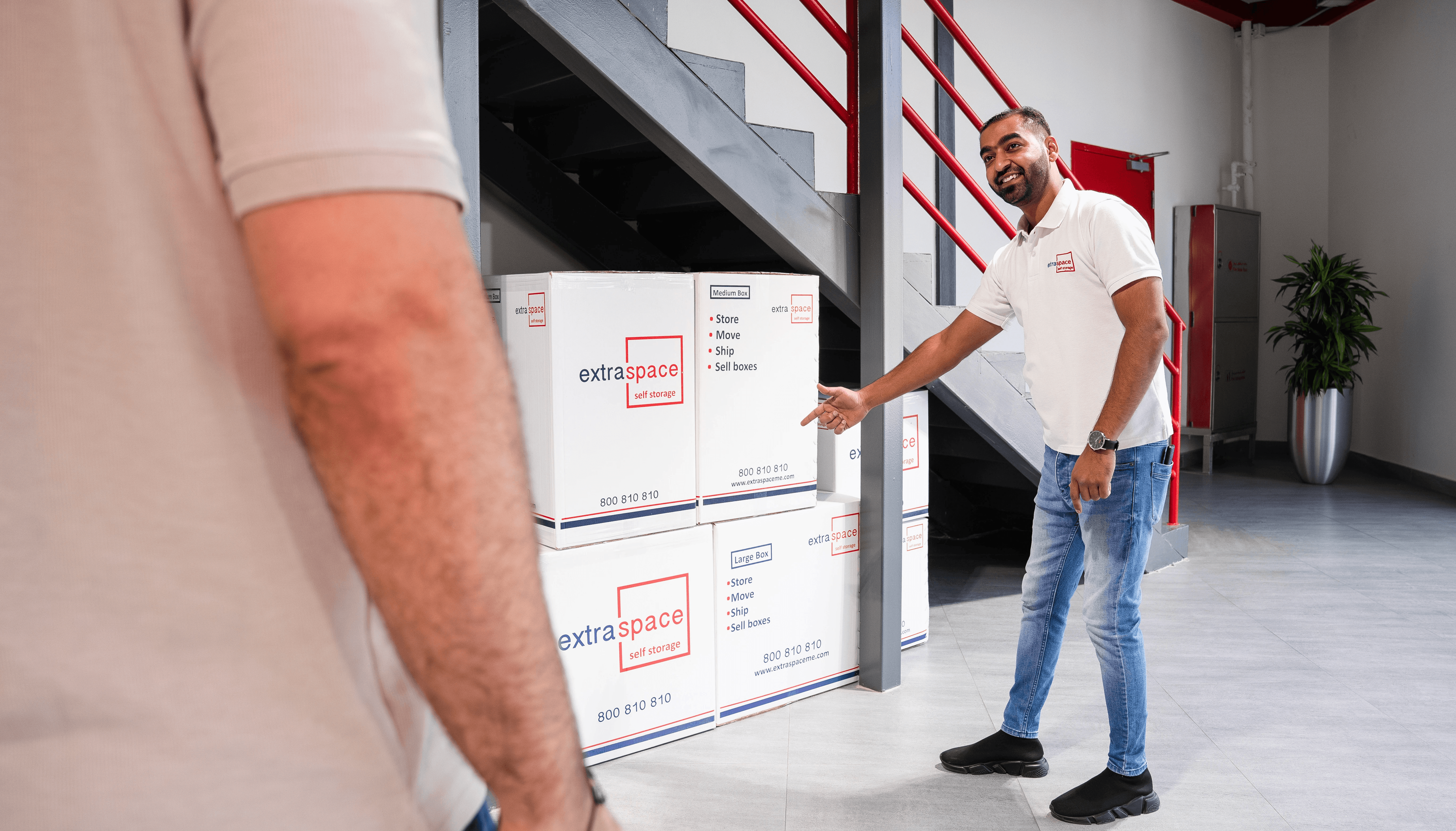
Professional help can be particularly useful for larger households, heavy or bulky furniture, fragile belongings, limited time or properties with difficult access, such as multiple floors. If you are considering a removal service, compare what is included rather than looking at price alone.
Check whether the service covers packing, loading and transport, what equipment is provided, how fragile belongings are handled, and what the quoted price and terms include. This makes it easier to choose an option that matches the demands of your move.
13. Use Storage If Your Move Cannot Happen All At Once
Not every relocation happens directly from one property to the next. If your new home is not ready, you need to vacate the old property first, or furniture arrives before you have space for it, rental storage can give you somewhere to keep your belongings during the transition, whether for a short period or longer term.
You can also keep seasonal or occasional belongings there while you organise the new home, rather than unpacking everything immediately. This can be particularly useful when moving into a smaller property or dealing with a gap between homes.
14. Keep Moving Day Organised And Safe
A few practical arrangements can make the day easier to manage and reduce unnecessary disruption.
Keep Children And Pets Clear Of The Work Area
During loading and unloading, keep children and pets away from the immediate area. This reduces the risk of accidents and keeps pathways clear for anyone carrying furniture or boxes.
Keep Essentials Within Reach
Have water, simple snacks and your essentials kit readily available. Load the vehicle so items you will need immediately are placed last and remain accessible when you arrive.
Keep Walkways Clear
Remove obstacles from hallways, stairs and entrances before loading or unloading begins. This gives everyone a clear route and reduces the chance of trips or collisions while carrying belongings.
Assign Someone To Coordinate
Have one person oversee where furniture and boxes should go as they arrive. Deciding this in advance prevents helpers from stopping to work out where each item belongs.
15. Unpack By Priority, Not All At Once
You do not need to unpack everything on the first day. Start with your essentials kit, then focus on bedding, bathroom basics and enough kitchen items for simple meals. Next, deal with anything needed for work, school or other immediate routines.
Seasonal clothing, decorative pieces and other belongings you will not need straight away can remain boxed until you have more time and space to organise them. This lets you settle in gradually without creating unnecessary clutter during the first few days.

Make Your Move Easier And Less Stressful
A smoother move does not require everything to go perfectly. Giving yourself enough time to work through the process at a manageable pace can make the transition feel more controlled and leave fewer decisions to make at the last minute.
Focus on what needs your attention first, and give yourself time to settle into the new home rather than trying to finish everything immediately. A little flexibility can make the transition easier to manage, even when plans change along the way.

