
Key Takeaways
Before arranging an international shipment, a few practical considerations can help you avoid unnecessary complications along the way.
Check that your goods meet both UAE export rules and the destination country’s import requirements, including any necessary approvals or licences.
Make sure your documents, HS codes and declared details are accurate, then choose a transport method that suits your timeline, budget and goods.
Allow for customs clearance at both ends and keep your invoice, packing list and physical goods consistent to reduce the risk of delays.
If you have never sent goods abroad before, the idea of international shipping can feel like one single task. In reality, it involves several stages: preparing your goods, checking what can legally travel, arranging documentation, choosing transport, clearing UAE customs, monitoring the journey and clearing customs again at the other end. What is required at each stage depends on the goods, the destination and the method of transport you choose.
This guide breaks down each stage, so you can understand what to arrange before your goods leave the UAE and what to expect once they are in transit.
How Does International Shipping Work From The UAE?
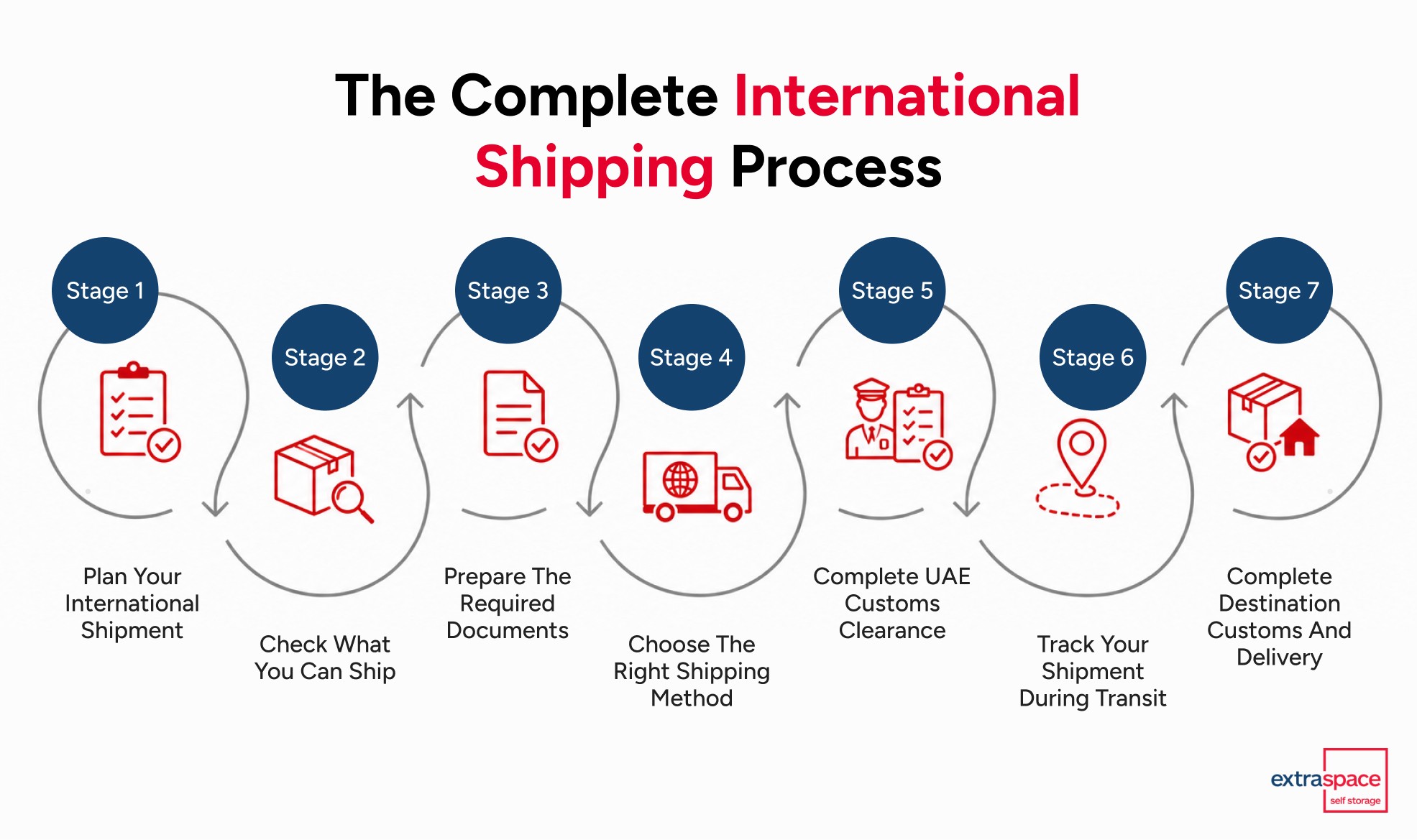
Step 1: Plan Your International Shipment
Before contacting a carrier, establish the basics of your shipment:
What you are sending: Identify the goods and whether they require special handling.
Weight and dimensions: Record the approximate weight and measurements, as these can affect freight costs.
Destination: Confirm where the goods are going and whether the shipment is personal or commercial.
Timeline and budget: Consider how quickly the goods need to arrive and how much you are prepared to spend.
For sea freight, larger consignments are commonly assessed by volume in cubic metres (CBM). Air freight can use chargeable or volumetric weight, so the dimensions of your goods may affect the cost even when they are relatively light.
Create a complete list of what you are sending as well. The contents and shipment type can affect the documentation required later, particularly when comparing a personal international relocation with a commercial shipment.
Step 2: Check What You Can Ship
Before packing, check whether your goods can be exported from the UAE and imported into your destination country. The rules depend on the type of goods, their destination and any approvals that may apply.
Prohibited Goods
These goods cannot be shipped under the applicable rules. Examples include narcotic drugs, gambling equipment, nylon fishing nets, and used or reconditioned tyres. Other goods may also be prohibited under customs laws, so the classification depends on the applicable rules.
Restricted Goods
These goods may be permitted, but you may need additional approvals, licences or supporting documents before they can be shipped. Requirements can vary for items such as food, electronics, liquids, textiles and medicines, as outlined under Dubai Customs' prohibited and restricted goods requirements.
Check Both Sides Of The Shipment
An item permitted to leave the country may still be restricted or prohibited when it reaches the destination. Check the import requirements at your destination alongside the relevant export rules, and keep in mind that customs requirements can change.

Step 3: Prepare The Required Documents
Once you know what you are sending, prepare the documents needed to identify the goods and support customs clearance. Depending on the shipment, these may include:
Commercial invoice: Sets out the value and details of the goods for customs purposes.
Packing list: Itemises what is inside each box or pallet so the contents can be checked against the declaration.
Bill of Lading: Used for sea freight as a contract of carriage and proof that the goods have been handed to the shipping line.
Air Waybill: The corresponding transport document for air freight.
Certificate of Origin: Confirms where the goods were produced and can affect how they are treated at the destination.
Customs declaration: Formally reports the shipment's details to the relevant customs authorities.
Export licence or insurance documentation: May be required depending on the goods, destination and shipping arrangements.
Restricted or specialised goods may require additional documents, such as permits, health certificates or dangerous goods declarations. Keep copies of the relevant paperwork for your records.
Goods also need to be classified using HS (Harmonised System) codes to determine applicable requirements, duties or restrictions. Make sure the descriptions, quantities and declared values match the goods, and check whether any documents require attestation for your shipment.
Step 4: Choose The Right Shipping Method
With your documents in order, choose a transport method based on your budget, timeline, destination, shipment size and the type of goods involved.
Air Freight
Suited to time-sensitive shipments and generally faster than other options, though typically more expensive. Chargeable or volumetric weight can affect the cost, particularly for bulky goods.
Sea Freight
Better suited to larger or bulk consignments where speed is less of a priority. Volume is an important consideration, making it practical for heavier or larger shipments.
Road And Rail Freight
Useful for destinations accessible by land, including regional routes from the UAE into neighbouring GCC markets. Depending on the route and cargo, this can provide a practical alternative to air or sea.
For example, a few time-sensitive boxes may suit air freight, while a household relocation or bulk stock shipment may be better suited to sea freight. Road transport can be practical for nearby GCC destinations where the route allows. For shipments involving multiple transport stages, freight forwarding may also be involved.

Step 5: Complete Customs Clearance In The UAE
Before your goods can leave the country, they must clear customs. This involves submitting an export declaration, reviewing the supporting information, checking the goods and, where necessary, carrying out an inspection or applying relevant charges.
In Dubai, export declarations are commonly processed electronically through systems such as Mirsal 2 via Dubai Trade. Once clearance is granted, the goods can leave the country, but they must still meet the customs requirements of the destination country before final delivery.
Step 6: Track Your Shipment During Transit
Once your shipment has departed, tracking lets you follow its progress and stay informed about its current status. Updates can help you identify when goods have reached key points in transit and alert you to potential delays, giving you a clearer idea of how the journey is progressing.
For longer international routes, keeping track of these updates can also help you plan around the expected arrival of your goods.
Step 7: Complete Destination Customs Clearance
Arrival does not mean the shipment is ready for delivery. It must first pass through the destination country's customs process, where the documents, contents and declared value may be reviewed. Depending on the goods and destination, customs duties, taxes or additional checks may also apply before the goods are released.
For commercial shipments, the agreed Incoterm determines how responsibilities for transport, import clearance, duties and taxes are divided between the seller and buyer. Under DDP (Delivered Duty Paid), the seller generally handles import clearance, duties and taxes, subject to the agreed terms. Under DAP (Delivered At Place), the seller generally delivers the goods to the named destination, while the buyer handles import clearance and applicable duties and taxes. The applicable term should be agreed before the shipment is arranged.
What Can Cause Delays In International Shipping?
Delays can result from several issues, including:
Incomplete documentation
Incorrect HS codes
Inaccurate item descriptions
Missing permits or approvals
Prohibited or restricted goods
Customs inspections
Destination-country requirements that differ from what was expected
Your commercial invoice, packing list and physical goods should also match. Differences in the quantity, description or declared value can lead to additional checks or requests for clarification, adding time to the process.

How Can Storage Help With International Shipping?
Storage can be useful when there is a gap between preparing your belongings and sending them abroad. You may need space to pack gradually, keep boxes organised before collection, or hold belongings while waiting for your move or transport arrangements. Businesses can also use storage to hold inventory before it is ready to leave the UAE.
For relocation or business needs, international shipping and storage can work together when your belongings need to be held before they are ready for transport. For individuals, personal storage can provide a secure place to keep belongings during this transition.

